Skip to content

Heresy & Orthodoxy

podcast 85 – Heretic! Four Approaches to Dropping H-Bombs

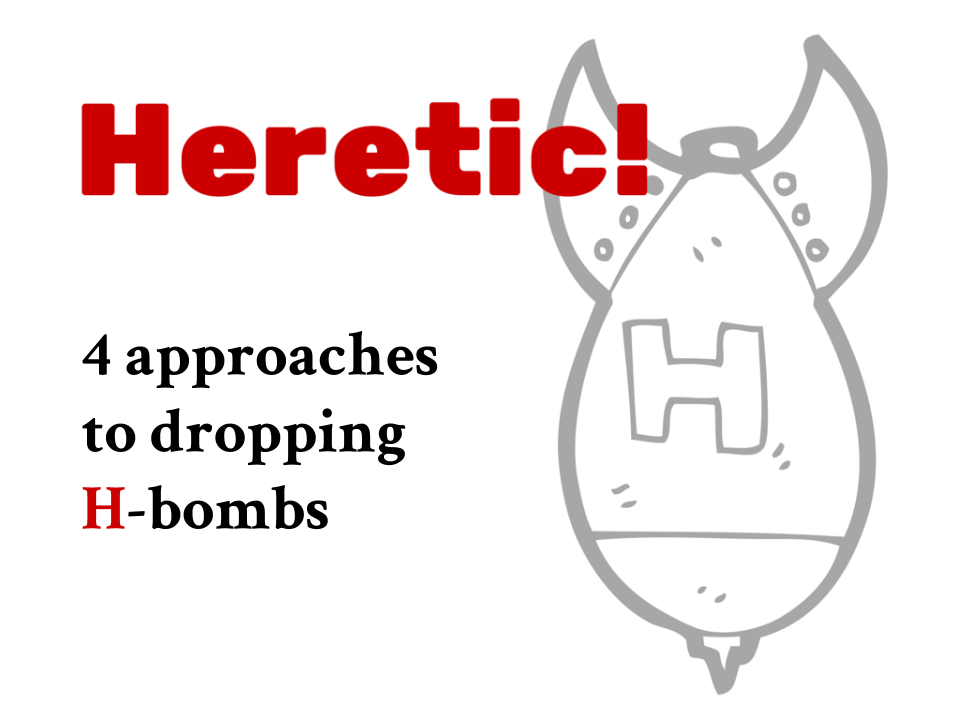
What is heresy? Sometimes “heresy” is the name of a sin. More often, it is supposed to be a certain sort of belief, claim, or teaching. In this talk, I outline four different Christian approaches to thinking about heretics and heresy – to dropping such “H-Bombs.”

Deviant Calvinism roundup 1 – Crisp on Crisp

Dr. Oliver Crisp’s Deviant Calvinism: Broadening Reformed Theology (kindle) has been blessed with excellent publicity. In several places, you can read or hear Dr. Crisp’s thoughts on the book, and get a good sense of what it is about. In the most recent episode of the trinities podcast, I discuss with him just how broad he thinks the Reformed tradition is. Next week we get… Read More »Deviant Calvinism roundup 1 – Crisp on Crisp

Dr. Randal Rauser interviews Dr. Michael C. Rea on the Trinity

Here. It’s an excellent, substantial discussion, posted in December 2014. If you don’t know who Dr. Rea is, he’s a leading Christian philosopher, specializing in metaphysics, and co-coiner of the useful term “analytic theology.” Here’s a rough guide to the interview, in case you want to skip around, or review after the fact, with a few sparse comments in italics. 1-12:20 Randal reads quotes about how difficult a… Read More »Dr. Randal Rauser interviews Dr. Michael C. Rea on the Trinity

a real scholar on the so-called “Lost Gospel”

Leading scholar Dr. Richard Bauckham has done a public service by chewing  thoroughly through the “Lost Gospel”: Dr. Mark Goodacre has posted Dr. Bauckham’s article(s) here. Let’s just say, he determines that it is all bun and no meat. A few teasers: They seem to be proposing a unique genre of ancient literature. Why should we believe them? It seems to be simply a way of getting… Read More »a real scholar on the so-called “Lost Gospel”

podcast 66 – Before Abraham was… what?

“Before Abraham, I am.” What did Jesus, or the author of the fourth gospel, mean here? In this episode we hear how some ancient authors interpreted John 8:58, including the famous North African bishop Augustine of Hippo.

podcast 59 – Dr. Carl Mosser on salvation as deification

When a Christian is saved, is she thereby deified? This is how Eastern Orthodox theologians describe Christian salvation, and it is a common saying that this is distinctive of Eastern Christian theology, but not of Western. In this episode, Dr. Carl Mosser (Associate Professor at Eastern University, on leave, and a Visiting Scholar at the Center for Philosophy of Religion at the University of Notre Dame) challenges this assumption,… Read More »podcast 59 – Dr. Carl Mosser on salvation as deification

J. Dan Gill: Must one believe in the Trinity and the two natures of Jesus to be saved?

In this interesting presentation called “Yet Another Music City Miracle” pastor J. Dan Gill points out that the way evangelicals evangelize is incompatible with the old catholic tradition, famously asserted in the “Athanasian” creed, Whosoever will be saved, before all things it is necessary that he hold the catholic faith; Which faith except every one do keep whole and undefiled, without doubt he shall perish… Read More »J. Dan Gill: Must one believe in the Trinity and the two natures of Jesus to be saved?

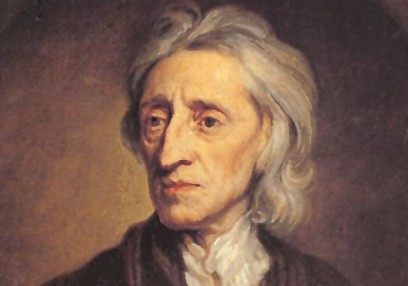
podcast 54 – John Edwards vs. John Locke’s Reasonableness of Christianity

John Edwards (1637-1726) was an Anglican Calvinist and would-be defender of Christian orthodoxy. Seemingly at the last minute, he tacked on to his Some Thoughts Concerning the Several Causes and Occasions of Atheism (1695) a critique of Locke’s Reasonableness. Guns blazing, he charged Locke (among other things) with promoting “Socinianism” (aka “Racovian” theology, i.e. the type of unitarian theology famously expounded by the Polish Brethren,… Read More »podcast 54 – John Edwards vs. John Locke’s Reasonableness of Christianity

podcast 53 – John Locke’s The Reasonableness of Christianity, Part 2

This week I start with a long and insightful listener comment. Among other things, he asks how one’s theology as unitarian or trinitarian affect one’s discipleship, or how one follows Jesus as Lord. I give a short answer from my own experience here, confessing how my own confusions hindered my spiritual life. The listener also asks: doesn’t Locke require too little? In particular, mustn’t a Christian also, minimally,… Read More »podcast 53 – John Locke’s The Reasonableness of Christianity, Part 2

continuing the conversation with Robert Bowman – different selves, same being?

Thanks to Robert Bowman for his reply to my off-target criticisms. I thought I understood what he was doing, following in the steps of many a theologian, but evidently I was mistaken in my inferring that he holds to a one-self Trinity. In this post, I make a clarification, then ask two questions. He says that in trinitarian doctrine, the term [“person”] was and is… Read More »continuing the conversation with Robert Bowman – different selves, same being?

podcast 49 – 2 interpretations of Philippians 2 – part 2

Jesus was “in the form of God,” but chose to empty himself, becoming like us. What do these famous statements by Paul mean? In episode 48, I examined a common evangelical interpretation of this text and found it lacking. In this episode, I compare scripture with scripture, to try to come up with a plausible, understandable, well-motivated interpretation. Can the authors of Genesis, Isaiah, Hebrews, and Revelation,… Read More »podcast 49 – 2 interpretations of Philippians 2 – part 2

podcast 44 – The Spiritual Journey of Sir Anthony Buzzard

I first encountered Sir Anthony Buzzard (yes, he’s a real “Sir”, and his wife Barbara a “Lady”) in the endnotes of Dallas Willard’s The Divine Conspiracy. Willard had referred to his short book The Coming Kingdom of the Messiah. Buzzard and Willard have in common a deep grasp of the good news of the Kingdom as preached by Jesus, and the centrality of God the Father to… Read More »podcast 44 – The Spiritual Journey of Sir Anthony Buzzard

podcast 43 – Dr. Stephen R. Holmes on God and humankind

Is God a self – a being capable of consciousness, knowledge, and choice, like us, but infinitely greater? Or is God a community, or a something-we-know-not-what? Dr. Holmes’s language in his book  The Quest for the Trinity made me think that he would answer: yes, God is a self, and not a community, or a mysterious Something. I took him to be a one-self trinitarian, and… Read More »podcast 43 – Dr. Stephen R. Holmes on God and humankind

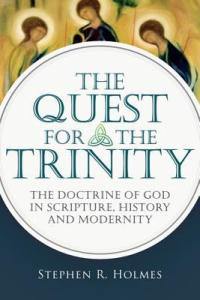
Dr. Stephen R. Holmes's The Quest for the Trinity

podcast 42 – Dr. Stephen R. Holmes on his The Quest for the Trinity

In this episode I talk with Dr. Stephen R. Holmes about his 2012 book The Quest for the Trinity: The Doctrine of God in Scripture, History and Modernity (UK title: The Holy Trinity). In this book Dr. Holmes argues that the much celebrated recent “revival of trinitarian theology” is no such thing. In his view, recent theology has deviated from the course set by the 4th centuries… Read More »podcast 42 – Dr. Stephen R. Holmes on his The Quest for the Trinity

podcast 41 – Stephen T. Davis’s Christian Philosophical Theology

In this episode, Dr. Davis reads short selections from his 2006 book Christian Philosophical Theology (Oxford University Press). As he said in our interview, this book is probably the best place to look for his mature views. Hopefully Oxford University Press will someday release this in paperback and electronic versions. He addresses John Hick’s and others’ “minimal christology” on which Jesus is merely a wise teacher,… Read More »podcast 41 – Stephen T. Davis’s Christian Philosophical Theology

Do the Gospels disagree about Jesus and God? Part 2 – Counting the Costs

Last time we looked at this inconsistent triad of claims, one of which we must deny: The New Testament gospels agree in their core claims about Jesus and God. Matthew, Mark, and Luke don’t teach that Jesus is God. John teaches that Jesus is God. We can look at this from two directions. First, we can ask what the evidence for each  of 1-3 is.… Read More »Do the Gospels disagree about Jesus and God? Part 2 – Counting the Costs