

podcast 94 – review of Seeking Allah, Finding Jesus – Part 2
Trinitarian theologies are a major barrier to Muslims accepting Christianity. In this episode we hear how Mr. Qureshi changed his view that the Trinity is a patently ridiculous doctrine.
Trinitarian theologies are a major barrier to Muslims accepting Christianity. In this episode we hear how Mr. Qureshi changed his view that the Trinity is a patently ridiculous doctrine.

While there have long been standard terms and sentences relating to the Trinity, there is not and has never been any clear consensus about how to understand those terms and sentences. There is agreement about what the sentences do or don’t imply (Tritheism? No. Monotheism? Yes. Ontological inequalities between the three? No.) But there is not an interpretation of the sentences themselves which is held… Read More »10 steps towards getting less confused about the Trinity – #9 – Formulas vs. Interpretations

Thanks to our friend Alvin Kimel for linking my post Jesus, God, and an inconsistent triad. Check out his post and the ensuing discussion here. Unfortunately, the fact that I’m a unitarian seems to distract him from the actual purpose of the post. He says, In this article he hopes to persuade us that the classical trinitarian doctrine is logically absurd. No. That is not… Read More »dialogue on God, Jesus, and identity with Alvin Kimel
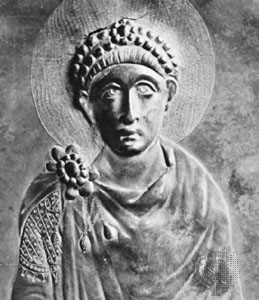
What is sometimes called the “Nicene Creed” and recited in churches is actually from this later council.
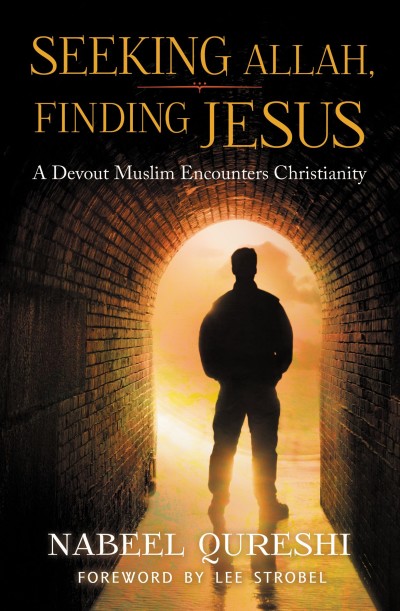
The gripping story of Nabeel Qureshi’s journey from Islam to Christianity.

What is God’s most important commandment? When asked about this, Jesus replied, “‘Hear, O Israel: the Lord our God, the Lord is one; you shall love the Lord your God with all your heart, and with all your soul, and with all your mind, and with all your strength.’” (Mark 12:29-30, NRSV) Notice the last two elements with which we are to love God: mind… Read More »10 steps towards getting less confused about the Trinity – #10 Don’t be afraid to think hard about God
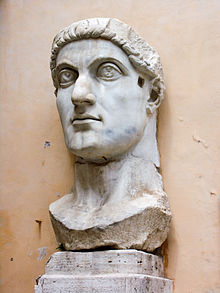
Most conservative (and even, many not-too conservative) Christians belong to churches and/or denominations which affirm traditional language about the Trinity. In this series, I’m going to just put all this on the table, as the fact is, many Christians, especially those from less “confessional” traditions, aren’t very familiar with these traditional formulas. I’m not going to go too much into the history for now. The… Read More »The Orthodox Formulas 1: The Council of Nicea (325)

In the first portion of this episode Dr. Thurow offers objections to subjective theories, and to penal substitution, ransom, and christus victor theories of atonement. Dr. Thurow then sketches his own, original approach to understanding atonement, which focuses on the collective sin of the human race.
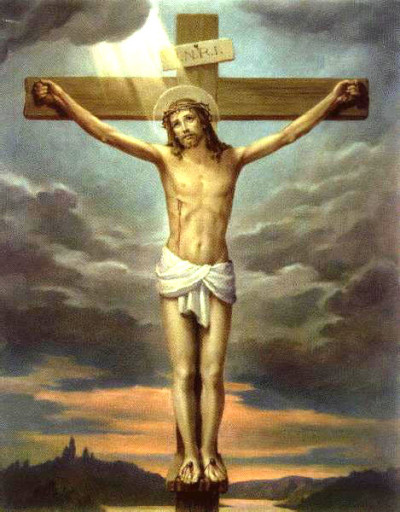
“Jesus died for our sins. Jesus provided atonement, to reconcile God and humans. Jesus paid a debt we could never pay ourselves. Jesus was willingly a sacrifice for our sins.” How should a thinking Christian understand these claims? In this episode I discuss atonement with Dr. Joshua Thurow.

If God exists necessarily, and this not because of anything else (e.g. there’s some other necessary being which necessarily causes God to exist too), then what explains this? Our friend the Maverick Philosopher urges that the only explanation is that God’s essence just is God’s existence. I disagree. I now try again to start with God’s existence, and a few essential divine attributes which should… Read More »Dialogue with the Maverick Philosopher: God is a being, not Being itself – part 8

Here’s where we stand. Bill urges that we should say that God’s essence = God’s existence because this (and only this) explains why God necessarily exists (and this not because of any other being). Me, I don’t grant that it’s even coherent to suppose that something’s essence just is its existence. So last time, I took a shot at a different argument for that conclusion… and… Read More »Dialogue with the Maverick Philosopher: God is a being, not Being itself – part 7
Last time, I explained why I don’t think that it is possible for anything’s essence to just be its existence. If that is impossible, then one can’t explain why God is a necessary being by saying that his essence just is his existence. Is there another way to explain why God is a necessary being? I think there is. It is important to understand that… Read More »Dialogue with the Maverick Philosopher: God is a being, not Being itself – part 6

In this episode of the trinities podcast I answer some of your questions.
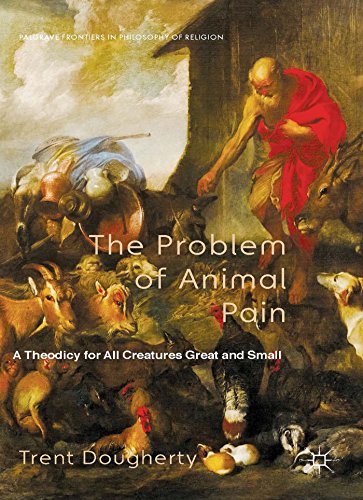
When a human suffers, we can think of how at least some suffering may be good for him or her. Perhaps suffering is the best way to develop virtues like perseverance and compassion. But what about animals?

At the Stand to Reason blog (this is the apologetics ministry founded by the inimitable Greg Koukl) I’ve been interacting with a few people on the question: Where Did Jesus Claim to Be God? In the current evangelical style, the poster Melinda Penner seems to understand this as equivalent to claiming to be God himself, to saying “I am God.” Never mind whether or not… Read More »Where did Jesus claim to be God?

In this follow-up post, three factors that make Rufinus’ corruption of Origen’s On First Principles all the more egregious. First, after recklessly changing anything he doesn’t like in translating Origen’s book, absurdly claiming that anything Origen says that doesn’t comport with the (then) new Nicene orthodoxy must have been changed by heretics, and lyingly (or idiotically) claiming to have filled things in only with Origen’s other words or ideas… Read More »Rufinus’s corruption of Origen’s On First Principles – Part 2
I’ve been working on my Trinities book today, and have been reading a lot of Origen (d. c. 253) lately. As is well known, most of his famous On First Principles (kindle, hardback) has been lost in the original Greek, but we have a “complete” copy of a Latin translation made by Rufinus of Aquileia (d. 410) in 398-9. Unfortunately, this translation was made in… Read More »Rufinus’s corruption of Origen’s On First Principles – Part 1

In the most recent post in this series, I plunged into some metaphysical issues about God, essence, existence, and necessity. As promised, I now discuss why is it impossible that God doesn’t exist. Let me start by saying that I know I’m out on a speculative limb here. This is uncertain business, metaphysics. But I’m going to state my views forthrightly. Refute them if you… Read More »Dialogue with the Maverick Philosopher: God is a being, not Being itself – part 5

In this episode Dr. Trent Dougherty of Baylor University tells us about his spiritual journey from secular, to evangelical, to Roman Catholic. Then we then discuss his general approach to what philosophers call “the problem of evil.” If God is perfect, and perfectly good, then why do so many terrible things happen?
In this second conversation, Mr. Kermit Zarley and I discuss a number of themes from his book The Restitution of Jesus Christ, including
the evangelical tradition of saying that “Jesus is God” or “Jesus is divine,” the biblical phrases “Son of God” and “the Son of God,” the texts commonly read as teaching that Jesus existed before his conception in Mary.