 In a recent public presentation I tried to define two concepts of idolatry, but I wasn’t quite happy with either of them.
So here’s the 2.0 version, submitted to you for criticism and comment:
- idolatry (def 1): the practice of honoring a representation or symbol as if it were a god or a person worthy of honor.
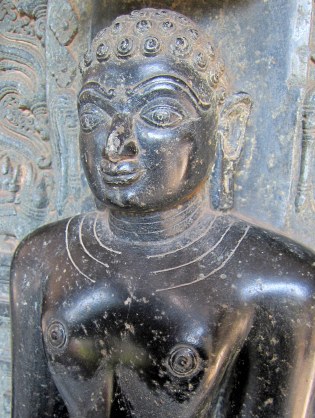
This is literal idolatry, which is the rule rather than the exception in the world’s religions – bowing, etc. to things like this Jain statue I photographed in Bombay. It was this sort of practice which was forbidden in the ten commandments:
You shall not make for yourself a carved image, or any likeness of anything that is in heaven above, or that is in the earth beneath, or that is in the water under the earth. You shall not bow down to them or serve them… Exodus 20:4-5, ESV
“Serve” here, I think, clearly signifies religious worship specifically. It is not clear, I think, that it is against any sort of respect for images, e.g. saluting a flag. But it is against the sort of image honoring typical of ancient near eastern religions.
Apart from this command, it seems to me, it is by no means obvious that the one God shouldn’t be worshiped by means of some object, be it representational or abstract. After all, millions, probably billions of people do this, either for some god or for the one God.
But very often in the New Testament, it is not the above concept which is in view. Instead, they have in mindRead More »What is idolatry?




 Sean Finnegan is an intelligent and well spoken “Biblical Unitarian” Christian. He recently earned an M.A. in Church History from Boston University. He runs the
 Princeton philosopher

 I was interviewed a couple of times at the 2012 Atlanta Bible College Theological Conference.


 Last time
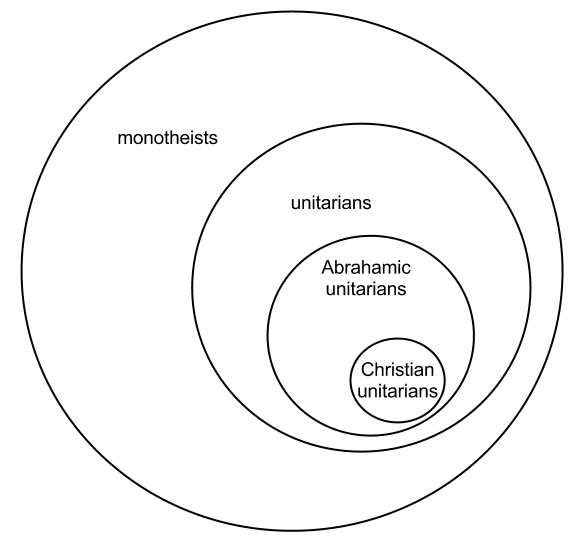
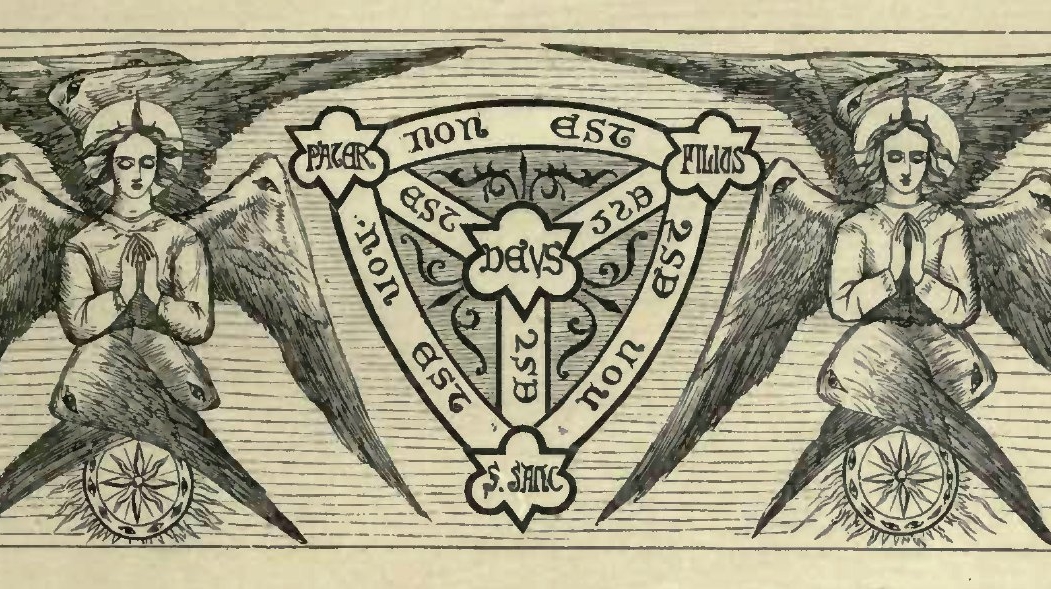
 I woke up this morning, and realized that there is a problem with how I’ve been defining the concept of a unitarian. In this post, I will attempt a definition of the concept of a trinitarian, after reviewing what is required of a good definition.