Heresy & Orthodoxy
podcast 126 – What is an evangelical? With Kermit Zarley
According to recent research, about 3 in 10 Americans are evangelical Christians. But what exactly is an evangelical?
the “same god” controversy and Christian commitment – Part 2
Do Christians and Muslims worship the same god? Many are inclined to think that trinitarian Christian and Islamic theologies are just too different for the two groups to even be referring to the same being. But as many have pointed out, be careful with that argument! For one thing, it may give you the unwanted conclusion that various Christian groups aren’t talking about the same god.… Read More »the “same god” controversy and Christian commitment – Part 2
podcast 118 – The Son of God 2 – Mr. Danny Andre Dixon’s “Arian” view of Jesus
Many Christians in the 2nd to the 4th centuries, and many since, have read the famous opening of the gospel according to John like this: In the beginning [i.e. at the Genesis creation, but not necessarily before] was the Word [i.e. the pre-human Jesus], and the Word was with God [i.e. the Father], and the Word was divine.
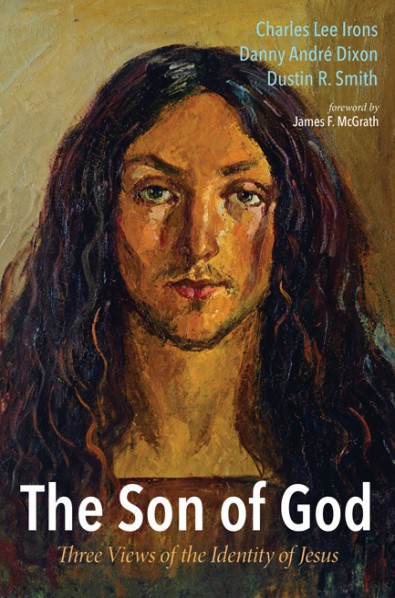
podcast 117 – The Son of God 1 – Dr. Lee Irons’s trinitarian view of Jesus
Dr. Lee Irons on his contribution to the new book The Son: Three Views of the Identity of Jesus, interview by Dr. Dale Tuggy for episode 117 of the trinities podcast.

podcast 115 – the aborted council at Serdica in 343
The eastern emperor and the western emperor agreed: there needed to be a new ecumenical council to somehow solve the theological disagreements festering from the controversy over Arius in 324-5.

podcast 114 – the recycled creed (342-359)
This “Fourth Creed” was offered as a non-controversial, “big tent,” ecumenical summary of faith. And surprisingly, given its initial reception, its language ended up being re-used several times after, as catholics struggled to replace the language of Nicea with something more widely acceptable.

podcast 113 – the council at Antioch in 341
What happened after the famous council at Nicea in 325? Was there rejoicing and peace, now that the “Arian” controversy had been definitively settled? Sadly, no.
10 steps towards getting less confused about the Trinity – #4 “same ousia” – Part 2
In this post – what did the bishops mean when they declared for the first time that Father and Son were the same ousia? You’ll want to have this list of interpretations from part 1 in front of you. Importantly, some of possible interpretations of ousia imply others, most notably, the problematic 1. 3 and 4 imply 1 (though not vice-versa). But 1 should be unacceptable to any… Read More »10 steps towards getting less confused about the Trinity – #4 “same ousia” – Part 2
10 steps towards getting less confused about the Trinity – #4 “same ousia” – Part 1
The innovative and (then) controversial language introduced at a meeting of catholic bishops in the year 325 was that the Father and the Son are homoousion, literally “same ousia.” But what is an ousia? This question continues to haunt trinitarian theology. Until we understand the meaning of a sentence, we can’t agree or disagree with it, or even go looking for evidence for our against it.… Read More »10 steps towards getting less confused about the Trinity – #4 “same ousia” – Part 1
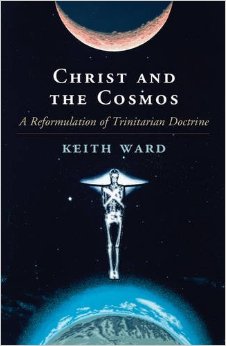
podcast 109 – Dr. Keith Ward on Christ and the Cosmos – Part 1
Dr. Keith Ward is a prolific and influential theologian, philosopher, and scholar of religions. He’s also an Anglican priest. In this first of two interviews on his 2015 book Christ and the Cosmos: A Reformulation of Trinitarian Doctrine, we discuss his christology, how to understand what is unique about the man Jesus.
On a Rebuttal to my “How Trinity theories conflict with the New Testament” – Part 3
Continuing to work through this critique of my post (part 1, part 2) – our friend Annoyed Pinoy writes, Yet, Jesus and the Holy Spirit are repeatedly associated with Yahweh/Jehovah. See, for example, my blog: Identifying Jesus with Yahweh/Jehovah Associated, sure, and in various ways. This is a common equivocation, I find, with theologians. We say “identify with” to mean “associate (in some way) with”.… Read More »On a Rebuttal to my “How Trinity theories conflict with the New Testament” – Part 3
10 steps towards getting less confused about the Trinity – #6 get a date – part 1
Some reference sources will tell you that Christians have always believed in the Trinity. This claim is misleading at best. Rather than dating trinitarian theology to the start of Christianity, if we carefully examine the history of theology, we can see a relevant series of dates, as elements of belief in a triune god emerge. Yes, Christians have always believed in one God, but in… Read More »10 steps towards getting less confused about the Trinity – #6 get a date – part 1

10 steps towards getting less confused about the Trinity – #7 – the deity of Christ vs. the Trinity
“Do you believe in the leadership of Mike?” “Yes?” I muttered unconvincingly. But I didn’t know what I believed. I was new in town, and had never lived in a place with such rabid, overactive basketball fans. The season hadn’t started yet, so I’d never seen the team play. But the fans were already working themselves up into a frenzy. Our team was the Wisconsin… Read More »10 steps towards getting less confused about the Trinity – #7 – the deity of Christ vs. the Trinity
podcast 94 – review of Seeking Allah, Finding Jesus – Part 2
Trinitarian theologies are a major barrier to Muslims accepting Christianity. In this episode we hear how Mr. Qureshi changed his view that the Trinity is a patently ridiculous doctrine.
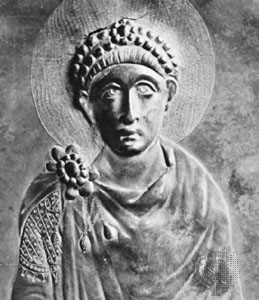
The Orthodox Formulas 2: The Council of Constantinople (381)
What is sometimes called the “Nicene Creed” and recited in churches is actually from this later council.
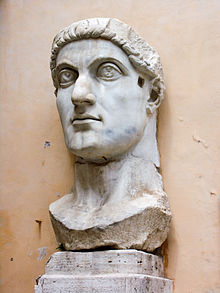
The Orthodox Formulas 1: The Council of Nicea (325)
Most conservative (and even, many not-too conservative) Christians belong to churches and/or denominations which affirm traditional language about the Trinity. In this series, I’m going to just put all this on the table, as the fact is, many Christians, especially those from less “confessional” traditions, aren’t very familiar with these traditional formulas. I’m not going to go too much into the history for now. The… Read More »The Orthodox Formulas 1: The Council of Nicea (325)

podcast 90 – Listener Questions 1
In this episode of the trinities podcast I answer some of your questions.
podcast 87 – Kermit Zarley on the deity and preexistence of Jesus
In this second conversation, Mr. Kermit Zarley and I discuss a number of themes from his book The Restitution of Jesus Christ, including
the evangelical tradition of saying that “Jesus is God” or “Jesus is divine,” the biblical phrases “Son of God” and “the Son of God,” the texts commonly read as teaching that Jesus existed before his conception in Mary.

podcast 86 – Kermit Zarley on distinguishing Jesus and God
Mr. Kermit Zarley is a retired professional golfer and Christian author, having written books on christology and eschatology. In this episode he describes being born again as a teen, his evangelical identity, and his discovery that in the New Testament, Jesus and God are two, namely the human Son of God (Jesus) and the one true God, Yahweh (aka the Father).