Skip to content

Heresy & Orthodoxy

Do the Gospels disagree about Jesus and God? Part 1 – Three Options

Let’s define “Jesus is God” to mean one or more of these: Jesus is numerically identical to the one God, YHWH, or Jesus fully possesses the divine nature of the one God, or Jesus is one “divine person” within the one God. The New Testament gospels are centrally concerned with Jesus, and with the one God. But how do they relate the two – or… Read More »Do the Gospels disagree about Jesus and God? Part 1 – Three Options

podcast 33 – Albrecht vs. Tuggy debate – Was Tertullian a trinitarian? Part 1

On March 29,  I debated Catholic apologist William Albrecht on whether or not Tertullian was a trinitarian. In this episode, our opening statements, and rebuttals, slightly edited (“cleaned up”) from the original audio (“in studio” for me, unfortunately, just over the internet for his side – but I did my best to make the whole thing listenable.) You can also listen to this episode on… Read More »podcast 33 – Albrecht vs. Tuggy debate – Was Tertullian a trinitarian? Part 1

podcast 31 – Dr. William Hasker on the “Arian” Controversy

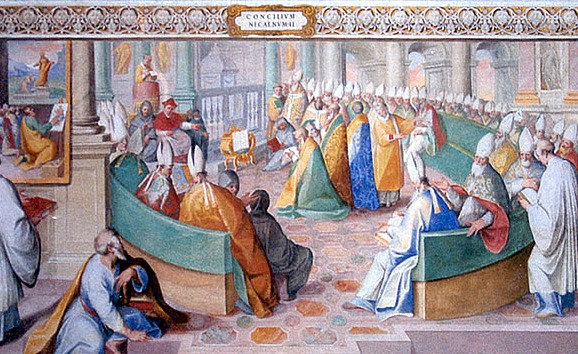
Was the Council of Nicea (325) a defense and re-affirmation of core catholic theology? And did the Council of Constantinople (381) merely re-affirm Nicea, and slightly clean up its language and the details of its theology? In this episode, analytic theologian Dr. William Hasker gives his perspective on these fourth century events, reading from his Metaphysics and the Tripersonal God (discussed here and here). He contrasts a… Read More »podcast 31 – Dr. William Hasker on the “Arian” Controversy

podcast 29 – Arius

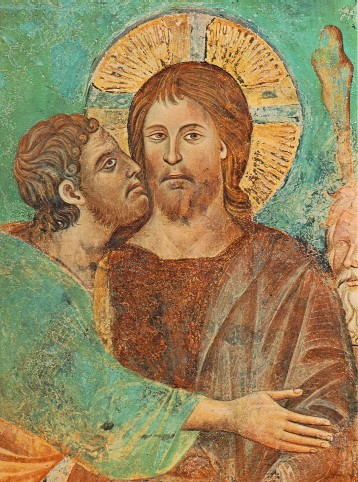
Was Arius the ultimate Judas? Was he an arrogant innovator, a devotee of Greek philosophy, a Judaizer, a hater of mysteries, a phony, a snake in the grass? In this episode, we look at Arius and his theology, in (as much as is now possible) in his own words. You can also listen to this episode on youtube. You can also listen to this episode… Read More »podcast 29 – Arius

podcast 23 – report from the second annual Los Angeles Theology Conference

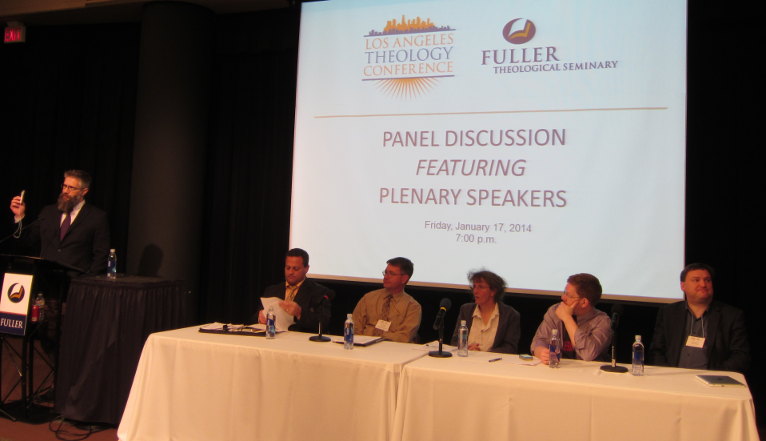
From left to right: Oliver Crisp’s Beard, Oliver Crisp, Thomas McCall, Fred Sanders, Karen Kilby, Lewis Ayres, and Stephen Holmes. In this episode I share my reflections on this conference, and specifically on Trinity theories in contemporary academic theology. You can also listen to this episode on Stitcher or iTunes (please subscribe, rate, and review us in either or both – directions here). It is also available on YouTube (you can subscribe… Read More »podcast 23 – report from the second annual Los Angeles Theology Conference

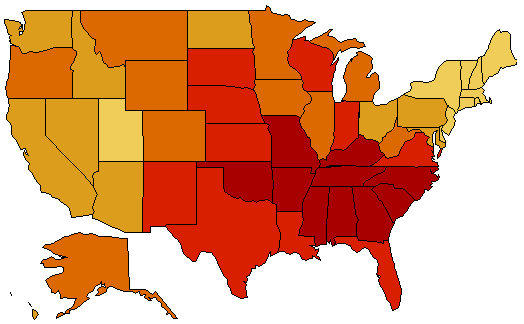
map of America by % evangelical

Mark, evangelicals, and catholics

Fr. Aiden Kimel has a good and thoughtful post on my Mark posts. I think he concedes my main point: … if we were to isolate the Gospel of Mark from the rest of the Bible, and indeed the Christian Church altogether, and read it just as historical artifact, would we come to the conclusion that Jesus of Nazareth is God? I doubt it. Indeed,… Read More »Mark, evangelicals, and catholics

why I’m not a Thomist 1 – the Christian tradition that God is a Being

Our friend Dr. Ed Feser has got himself worked up into full drunken polemicist mode. I earn ridicule and ire normally reserved for Dawkins types. Evidently I touched a nerve by pointing out that most (analytic) philosophers now – reflecting a fairly wide consensus since early modern times – think of God as the greatest being there is or could be, and not as “Being… Read More »why I’m not a Thomist 1 – the Christian tradition that God is a Being

Boyd: a broken Trinity?

Pastor Greg Boyd, on the theme of Jesus being forsaken by the Father (and Spirit?) on the cross: If God’s eternal essence is the perfect love of the Father, Son and Holy Spirit, as I believe, then any suggestion that this perfect love was severed, even for a moment, would, by definition, entail that God ceased to exist.  Such a conclusion is, to my way… Read More »Boyd: a broken Trinity?

Roger Olson asks: How important is the doctrine of the Trinity?

Theologian Roger Olson asks, How important is the doctrine of the Trinity? He seems to hold, with many others, that …the doctrine of the Trinity is crucial, essential, indispensable to a robust and healthy Christian view of God. But, The problem is, of course, that many, perhaps most, Christians have little or no understanding of the doctrine of the Trinity. And they couldn’t care less. Indeed.… Read More »Roger Olson asks: How important is the doctrine of the Trinity?

Frost on Trinity and Scripture

Lutheran theology grad student Matthew Frost reflects on The Doctrine of the Trinity, and Scripture. Some insights: …because this doctrine is built on a scriptural foundation, we also have a tendency, in every generation, to read the doctrine as it stands back into the texts on which we have built it. And there’s a problem with that, namely: none of the authors of scripture, or their… Read More »Frost on Trinity and Scripture

7 Weird Theologians

Daniel Calder surveys the Top 7 weirdest Christian theologians. Of these, how many are atheists? Consider, for example, John Scotus Eriugena (c.800 – c.877). The author gives an encyclopedia quote which rings true to me. In general, the system of thought just outlined is a combination of neo-Platonic mysticism, emanationism, and pantheism which Eriugena strove in vain to reconcile with Aristotelean empiricism, Christian creationism, and theism.… Read More »7 Weird Theologians

more thoughts on “God,” atheism, and panentheism

Dr. James McGrath has responded to my post on belief in “God” where this amounts to an ineffable Ultimate – which, I claimed, is a variety of atheism. He seems to think that thinking that God resembles humans to any degree or in any way counts as “anthropomorphism.” I think that’s a goofy use of the term, but why quibble about words? So, in James’s… Read More »more thoughts on “God,” atheism, and panentheism

podcast 14 – One God, One Lord, Two Interpretations

The apostle Paul famously says, …for us there is one God, the Father, from whom are all things and for whom we exist, and one Lord, Jesus Christ, through whom are all things and through whom we exist. (1 Corinthians 8:6) Is this passage a radical transformation of, or a redefinition of Jewish monotheism? Is it an insertion of Jesus into the Shema confession, that… Read More »podcast 14 – One God, One Lord, Two Interpretations

Atheistic belief in “God”

Not “inconceivable” – but rather, “God.” Check out this interesting post, The Dread God Roberts, at our friend Dr. James McGrath’s blog Exploring Our Matrix. (Which amazingly, just had its 10th birthday. He was blogging way before it was cool.)  Dr. McGrath describes himself as a Progressive Christian. I commented over there, and he’s replied. The part of his post that got me going was this. Tillich’s… Read More »Atheistic belief in “God”

“Trinity” in paperback form

Suppose you want to really study my entry “Trinity“ in the Stanford Encyclopedia of Philosophy. If you’re like me, when you want to really read something, you’ll print it out (and then proceed to destroy it with a pencil and a highlighter). And if you do print it all out, it’ll make your printer burst out in tears. The whole thing, with supplementary discussions, comes… Read More »“Trinity” in paperback form

Tom Belt on the Trinity

At his blog An Open Orthodoxy. In (of course) three parts: Part 1, Part 2, Part 3. I demur in some comments. Check out their posts and comment there. Tom Belt and Dwayne Polk are open theists. I take it that the title of the blog emphasizes that they are truly catholic – that on the things that really matter, they agree with mainstream Christians.… Read More »Tom Belt on the Trinity