Skip to content

Heresy & Orthodoxy

analytic theologian Oliver Crisp on the coherence of Incarnation

Somehow I missed this when it came out back in July. Our friend the Tentative Apologist Randal Rauser has a podcast (itunes) now, and he’s done a substantial, no-bs interview of leading Reformed analytic theologian Oliver Crisp, of Fuller Seminary. Listen to it at Randal’s blog here. Crisp does a good job presenting and giving a basic defense of the coherence of the traditional catholic… Read More »analytic theologian Oliver Crisp on the coherence of Incarnation

podcast 12 – the Apostles’ Creed

The Apostles’ Creed is one of the most beloved and most widely used creeds in the Christian world. Is it really by Jesus’s original twelve apostles? Why is it so popular? Is it the one truly uncontroversial creed, something which all Christians – Catholic, Orthodox, Protestant, pentecostal, etc. can agree on? And is it the most ancient Christian creed we possess? We’ll answer these questions in this, our… Read More »podcast 12 – the Apostles’ Creed

My diabolical “ruse” exposed – drat!

caveman lawyerMy “On Baukham’s Bargain” has drawn a response from my biggest fan, the Reformed brawler Steve Hays. I reply in the comments there.

Given how many evangelicals have jumped on the Bauckham Bandwagon, I hope that it’ll get some serious discussion in the journals or elsewhere.

Here’s my first reply to his post:

Steve, it’s odd to spend so many words sniping at my summary of what Bauckham holds forth as advantages of his theory. e.g. After the seventh point (of Bauckham’s!) you object, “That’s a diversionary tactic.” Is that an objection to Bauckham?

Read all the way through, then think, and then, finally start objecting.

About the “fatal concession”, I’m afraid you’re mistaken. The time-explicit version of the indiscernibility of identicals is all I need to make the point.Read More »My diabolical “ruse” exposed – drat!

podcast 6 – the “Jesus: Prophet, Messiah, God?” Debate in Melbourne, Australia

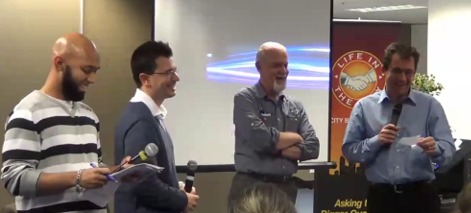
This episode features this 2013 discussion/informal debate about Jesus in Melbourne, Australia, featuring a trinitarian Christian (Dr. Bernie Power), a unitarian Christian (Pastor Steve Katsaras), and a Muslim (Mr. Shahir Naga). The audio is a little rough; I’ve cleaned it up a little for this episode. Here is the video from which this audio is taken. Many thanks to the City Bible Forum in Melbourne… Read More »podcast 6 – the “Jesus: Prophet, Messiah, God?” Debate in Melbourne, Australia

podcast 5 – Anglicans Defending “Athanasius”

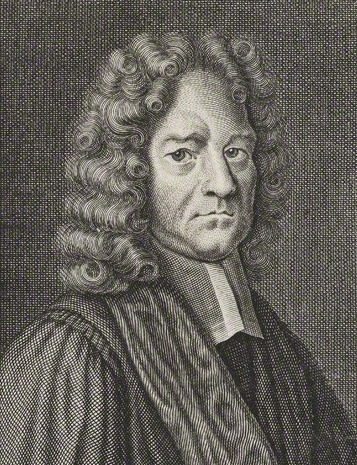
This time, an answer to Nye by Anglican minister and writer William Sherlock (c. 1641 – 1707 – pictured to the left). He offers a unique, but to us surprisingly contemporary rational reconstruction of the claims in the “Athanasian Creed.” Did he convince his fellow Anglicans that the “Athanasian Creed” is, after all, self-consistent? We’ll also look briefly at a sort of defense of the “Athanasian… Read More »podcast 5 – Anglicans Defending “Athanasius”

trying to prepare a sermon on the Trinity

H/T Oliver Crisp on Facebook. From the fun theologygrams. Seems there is no rest for the weary. Only one way out: a big, comfortable, ground-hugging, smokescreen of mystery. Make it really big, wait till it spreads, and then make your getaway, before it dissipates. Quickly!  

podcast 4 – Anglicans vs. “Athanasius”

As we’ve seen, the “Athanasian Creed” appears to be incoherent, that is, inconsistent with itself. One response is to creatively interpret it in a way which does seem coherent. We will explore this approach in many future episodes. Another response is to stick with the other catholic creeds, such as the “Apostles’” and Nicene creeds, rejecting the “Athanasian” Creed as unnecessary and unhelpful. That’s what’s… Read More »podcast 4 – Anglicans vs. “Athanasius”

podcast 3 – making Abelard cry

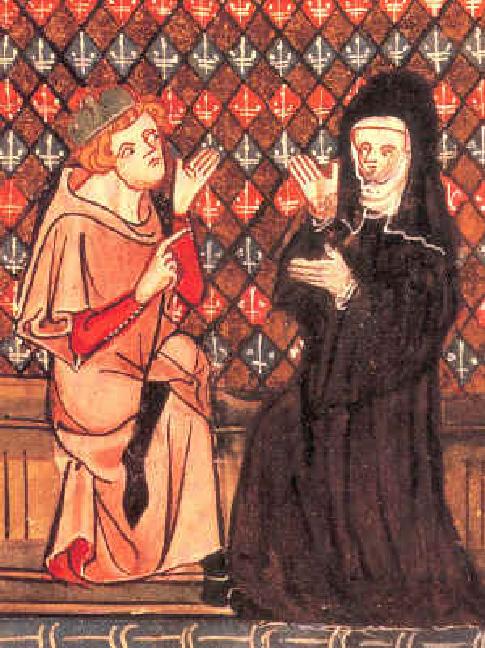
In this episode: an interesting historical episode relating to the “Athanasian Creed.” It makes a grown man cry. This creed really “starts up” Christian philosophers; surely, a distinction here, a distinction there, and the appearance of contradiction can be chased away. But, our efforts are not always appreciated, as Abelard learns in the year 1121. This episode incorporates part of Abelard’s famous History of My… Read More »podcast 3 – making Abelard cry

No can eat: a Pawlian parable

Dr. Timothy Pawl has argued that the idea of Incarnation is consistent since we should think the councils understood what one may think are contrary predicates in a way such that a two natured thing may rightly be called both. So if “impassible” means “has a nature that is impassible” and “passible” means “has a nature that is passible,” then Christ will be both “impassible”… Read More »No can eat: a Pawlian parable

Reformed trinitarian to unitarian Christian

Here’s a long but engaging interview by Sean Finnegan at his Christian Monotheism website. (Podcast RSS feeds here.) The subject, a young man named Christopher Amelung, underwent the change of theology noted above. He doesn’t recount all of the relevant arguments and exegesis; it’s rather a narrative of his own thoughts, emotions, and relationships. This is not a deconversion story, but a story of a… Read More »Reformed trinitarian to unitarian Christian

William Lane Craig in the Chronicle of Higher Education

Here. On the whole, a well done piece. Craig is indeed a fearsome debater, and a bold and insightful scholar. His devotion to apologetics makes him a bit uncool among professional philosophers. But I would guess that his work is probably read by more average people – Christians, atheists, Muslims, and who-knows-what – than any living philosopher. The reason is that it has many good… Read More »William Lane Craig in the Chronicle of Higher Education

St. Patrick’s bad analogies

Quite funny! This fellow has real comedic talent. It is remarkable, when you step back to consider it, that this video is by a trinitarian. It’s main point is: no one really knows what these traditional words mean (those of the “Athanasian” Creed); we just say them. Trying to understand those words is futile. A striking amount of trust, for a Protestant, in an anonymous… Read More »St. Patrick’s bad analogies

the concept of a triune God an anachronism in the first three centuries

After what has been said in the foregoing pages, we are prepared to re-assert, in conclusion, that the modern doctrine of the Trinity is not found in any document or relic belonging to the church of the first three centuries. Letters, art, usage, theology, worship, creed, hymn, chant, doxology, ascription, commemorative rite, and festive observances, so far as any remains, or any record of them… Read More »the concept of a triune God an anachronism in the first three centuries

Kermit Zarley on the Holy Spirit

Theology blogger / author / golf pro Kermit Zarley posts on the Holy Spirit. A few excerpts: During the 2nd and 3rd centuries, there was no consensus among church fathers, called “apologists,” about the constitution of the Holy Spirit. Most of them didn’t think it was important. In fact, there was a widespread fluidity of ideas among Christians about it. Some thought the Holy Spirit… Read More »Kermit Zarley on the Holy Spirit

publications update

My paper critiquing the Brower-Rea “constitution” approach to the Trinity has now been published in Philosophy and Theology. I just received the issue this week. Pre-print is on the home page. I worked very hard on this, off and on, for more than two years, and tried (with limited success, I think) to make the discussion intelligible to non-philosophers. It’s a metaphysics-heavy discussion though. My… Read More »publications update

the fate of “social” trinitarianism in late 17th c. England (Dale)

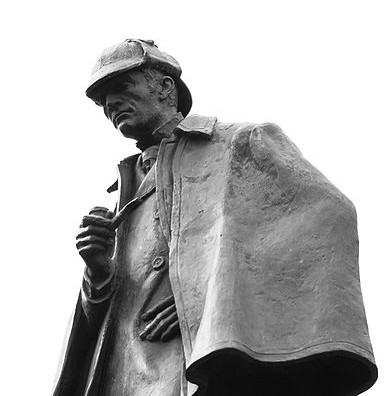
sherlockAs pretty well summarized here by unitarian Theophilus Lindsey.

In the year 1694 began the great contest concerning the Trinity, betwixt two celebrated doctors of the church, Sherlock and South; each of them reputed and reputing himself orthodox, and each of them espoused by learned and powerful partisans.

Dr. Sherlock expressly asserted, that the three persons in the Trinity are three distinct, infinite Minds or Spirits, and three individual Substances. Dr. South held only one infinite eternal Mind or Spirit, with three Somethings that were not three distinct Minds of Substances, but three modes, faculties, attributes, relations, relative properties, subsistances, as there were variously denominated. Dr. Sherlock was accused, and with great justice, if words have any meaning, of polytheism, or holding three Gods. Dr. South, on the other hand, came under the imputation of explaining away the Trinity, and falling into the Sabellian or Unitarian system: and accordingly some of the Socinians took advantage of the Doctor’s explication of the doctrine of the church, and declared in their writings, that the should not be backward to give their approbation to the Liturgy and the Articles, if that was the kind of Trinity which the language therein used was intended to inculcated.

The university of Oxford, to whom Sherlock was obnoxious on account of his political principles, declared forRead More »the fate of “social” trinitarianism in late 17th c. England (Dale)

Flocanrib and the ambiguity of the word “Trinity”

Our fictional story was necessary, to help us think about some important distinctions about referring terms. It is easy to forget that “Trinity” was once a puppy, a neologism. But it was. It was born some time in the second half of the second century. We don’t know who coined it, but the earliest surviving mention of it is by Theophilus, bishop of Antioch (d.… Read More »Flocanrib and the ambiguity of the word “Trinity”

Flocanrib explained – Irene’s mistake

Irene reflected on how she had got to thinking that her birthday gifts came from one person. She had labelled the source or sources of them “Presenty.” At first she may have been open-minded about whether the gifts came from one or many. But once she’d coined the name, that, in her imagination, solidified the source as being a single person. This seemed to be… Read More »Flocanrib explained – Irene’s mistake